
09/July
How Pumice Stone Cleans Water at Home and in Industry
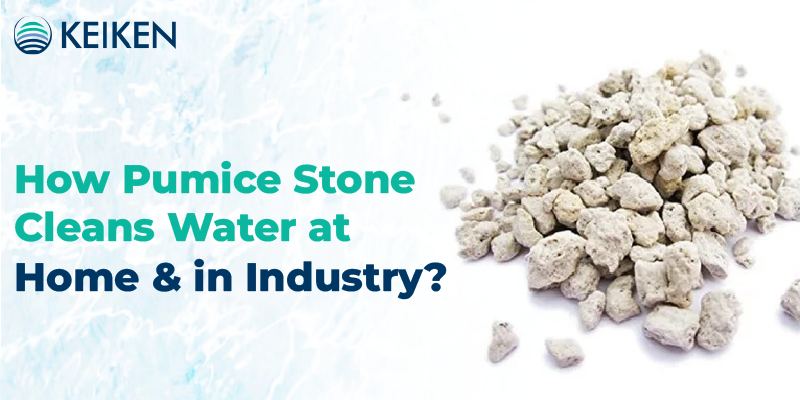
Thanks to industrialism and technology, water filtration is now easier and cheaper. Whether for industrial or residential use, a good quality water filter is a must—this is where pumice filtration for household water systems and commercial sectors comes in. Unlike other advanced filters, this is eco-friendly, long-lasting, and affordable, making it the reliable choice in the water filtration industry.
Now, as you may already know, Pumice has a deceiving look as it is a porous rock. Well, since it is found near the volcanoes, the shape and structure are different and uncommon; even so, this stone can filter water for you alone, making it 100% clean and usable, whether for commercial or residential use. So, in today’s blog, we will discuss more about how pumice stones work as an ultimate water filtration option and what makes it ideal for water treatment globally.
Read on with Keiken Engineering.
But before… let's rewind a little about this natural water filter!
Pumice Stone Filter: A Quick Recap
Pumice is a porous stone full of air pockets and tiny pores; it’s a natural filter medium both mechanically and biologically. These air pockets and pores trap dirt, sand, and other unwanted particles that can ruin the water quality. In fact, this simple stone also supports the microbes that turn into organic matter.
The best part is it’s lightweight, long-lasting, natural, and non-toxic. And it breaks down unwanted growth, leading to more profound water purification for both industrial and domestic sectors.
In the Domestic Sectors, it works as:
- Aquarium filter
- Roof rainwater collector
- Home water purifiers
Whereas in the Industrial sector it works in:
- Aquacultural ponds
- Food and beverage industry
- And finally, wastewater treatment plants
How Residential and Commercial Industries Use Pumice for Water Filtration?
Here’s a quick list:
1. Removes Turbidity and Suspended Solids
One of the main reasons industries use this is that it has reduced turbidity from water. Now, turbidity refers to how cloudy water looks due to tiny particles. If it’s high, it affects taste, safety, and even the efficiency of disinfectants like chlorine. In such cases, Pumice catches and holds tiny particles, making water look clearer and safer.
The process is simple. The rough surface of pumice catches floating particles like clay, silt, or organic matter, and the porous structure allows high flow without clogging easily.
Residential communities use pumice stone for greywater recycling treatment, but also for:
- Small-scale rainwater harvesting filters
- As Primary filtration in textile and paper manufacturing units
(Also read from our previous blogs: What Makes Pumice Stone Ideal for Water Filtration)
2. Removes Heavy Metals
Not just for residential, but the industrial uses of pumice in effluent treatment plants are also highly effective. Many industries that produce mining, metallurgy, and electronics discharge water that contains heavy metals like lead, cadmium, zinc, and copper, which are toxic even in small amounts. But this volcanic stone can absorb and remove these metals from water, making it safe for the environment. In this case, the components of the rock, like silicates and oxides, chemically attract heavy metals and filter them out of water.
3. Pre-Filter for Reverse Osmosis Systems
You know, Reverse Osmosis or RO is widely used for water purification. But the issue is that the RO membranes are easily clogged by dirt, sediment, and organic waste. But thanks to the pumice rock, it acts as a pre-filtration layer that protects the more delicate systems downstream, increases RO membrane life, reduces maintenance cost, and finally ensures RO has smoother and faster water flow.
It’s used in a layered filter setup, and it’s also suitable for areas with muddy or turbid water sources. But it’s also ideal for specific commercial industries like Beverage bottling plants, pharmaceuticals, and power plants.
4. Removes Odors And Organic Matter
If the water smells or is coloured, it’s because of high levels of organic matter such as decaying plant material, oils, or detergents. Even in these cases, this water filtering stone will remove these impurities. Plus, it’s also good for reducing Biological Oxygen Demand (BOD) and Chemical Oxygen Demand (COD) levels, which is best for septic tank effluent pre-treatment, domestic greywater recycling, and finally for treating wastewater from dairies or slaughterhouses.
This may sound like a small benefit, but it supports aerobic bacteria that digest organic waste, reduces foaming, smell, and color, and keeps water systems biologically balanced.
5. Controls Oil and Grease
The cost-effective pumice media for water purification effectively separates oil and grease from water, particularly in automotive and machinery applications that frequently encounter oil-contaminated wastewater. Pumice here uses its surface to trap oils, fats, and grease. This is not just an easy process, but it is an eco-friendly solution in such industries. Apart from that, it’s suitable for car wash wastewater units, commercial kitchens, food packaging, and petrochemical refineries.
Bottom Line
The pumice filtration for household water systems works great for commercial industries, too. This volcanic rock, with its porous surface, filters clean water and helps microbes break down organic matter. The best part about this water filtering component is that it is affordable. It typically offers better results when compared with other natural water filter mediums, including activated carbon. Suitable for both residential and commercial purposes, this solution is effective in reducing water wastage in almost every significant industry. So, if you are an individual, organisation, or commercial sector looking to promote water efficiency with pumice stone, we, at Keiken Engineering, can help.
Get in touch with us to make a bulk order, or for more information, call us at: + 34 910 577 254