
26/March
Fostering Pumice Stone For Water Filtration
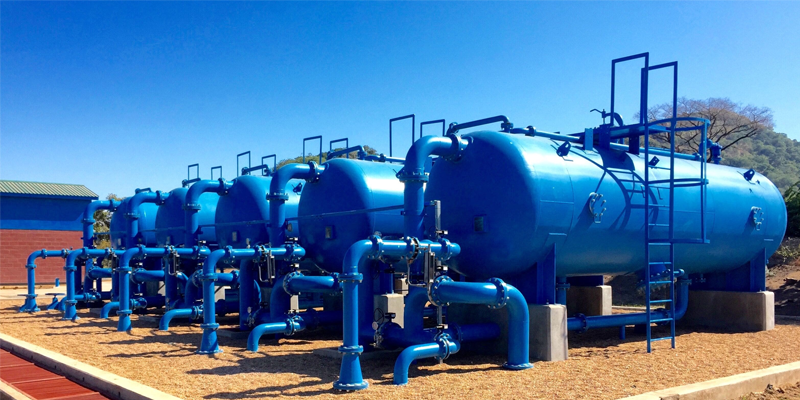
Water treatment relies on effective filtration media to remove contaminants and provide safe drinking water. As a result, industries, municipalities, and water treatment facilities have consistently sought materials that improve filtration efficiency and are environmentally friendly.
Pumice stone presents a compelling option in this regard, thanks to its natural filtering abilities and its positive environmental profile. It's a widely used choice in filtration today, appreciated for its inherent filtration properties and its environmental advantages.
Pumice, a volcanic rock of surprising lightness, is prized for its porosity, making it an excellent filter. As a result of these characteristics, the pumice stone is gaining popularity among engineers and water treatment specialists in modern water treatment plants.
This interpretation of pumice use in filtration systems helps industries select a suitable solution to treat water effectively.
Why is the Pumice Stone the best medium to use in the filtration of water?
Industries, by their very nature, consume vast quantities of water. Cooling systems and the manufacturing process itself are heavily dependent on it. Conversely, consuming raw water poses a range of potential problems. Machinery suffers damage, and production goes off course.
Understanding the Mechanism of Pumice Filtration
Pumice filtration systems function as a comprehensive solution for removing a range of contaminants, including:
- Core silt and sedimentary deposits
- Naturally occurring particulates
- Suspended solids
- Finer particulate matter
This method of filtration does wonders for water quality, protecting industrial machinery from clogs and accumulation. At Keiken Engineering, we rely on pumice filtration as a key component of our industrial water treatment.
It's how we remove unwanted materials before they can cause problems for sensitive systems.
How does Pumice boost the industrial water filtration performance?
Pumice has to undergo a variety of filtration processes to ensure feasibility. Multimedia filtration beds usually contain pumice among other materials, which engineers use.
Here are the ways that reflect the utilisation procedure of the Pumice to boost performance:
- Desalination Pretreatment
In desalination plants, the suspended solids in the ocean is into the removal procedure during the pre-treatment phase using pumice before the seawater passes through reverse osmosis membranes. This filtration prevents damage to membranes and enhances plant efficiency. - Drinking Water Treatment
Water treatment plants in the region use pumice to remove suspended solids and improve water clarity before additional purification, thus ensuring clean drinking water. - Industrial Water Treatment
Industries need effective filtration to protect machines and maintain water quality at a certain needful level. Pumice is into use to clean up industrial water systems, and solids and contaminants. - Wastewater Treatment
Pumice filtration beds is in usage in wastewater treatment plants to collect suspended solids and improve effluent quality before discharge or reuse.
These applications demonstrate how pumice is in use in trusted water filtration across various industries, and fostering water filtration while boosting performance.
How does pumice remove suspended materials?
One of the key problems in water treatment is suspended solids. The small particles will be suspended in water, which leads to turbidity, equipment blockage, and disruption of the purification process.
Pumice is effective in the removal of solids suspended due to its internal structure. The numerous microscopic pores in the rock provide channels through which particles are trapped as water passes through the filtration bed.
This method helps reduce:
- Water turbidity
- Silt density index (SDI)
- Suspended particle concentration
Lower SDI values are especially important in highly treated systems, such as reverse osmosis.
Pumice removes particles during the initial steps of the process, thereby protecting the filtration membranes and improving system reliability.
Due to its filtration properties, pumice is effective in systems with very high suspended solids in the treated water. You can also check out (How Pumice Stone Helps Remove Contaminants from Water) to achieve a more detailed insight into the action of the pumice in the process of filtering.
Volcanic Pumice vs Filter: Which medium performs better?
Pumice also offers several benefits over conventional filtration media. These are some of the advantages that make it a good choice for modern water treatment systems.
Lower Energy Consumption
Since pumice is a porous material, the filtration systems are also more effective at lower pressure drops.
Environmentally Friendly Material
Pumice is a natural volcanic rock that does not require heavy chemical treatment, making it a sustainable water treatment process.
Versatile Filtration Use
In this case, high-performance systems are very useful, and one such system consists of pumice and other filtration media such as sand, garnet, or anthracite.
Pumice has the following benefits that have made it an appealing philtre technology. These are the benefits that make pumice popular in filtration technologies.
Where do we choose better filter media?
Choosing the right filtration media goes beyond just picking a material. Water treatment systems need to deliver consistent quality, maintain reliable particle-size distribution, and use high-quality materials that meet industry standards.
The pumice filter media must be of good quality, and they must offer:
- Sufficient granulometry classification
- Nevertheless, constant filtration properties
- Compliance with water treatment demands
- Industrial reliable supply
Pumice filtration media has also been under wide distribution by specialty water treatment vendors, and is in use in desalination plants, industrial water systems, and municipal treatment plants.
It shall also be assembled with experienced suppliers to ensure the filtration systems are efficient and reliable in the long run.
Wrap Up
The world has been witnessing the rising demand for clean water, thereby driving advances in water treatment technology. Pumice stone offers a potentially useful natural method for water filtration. Its porous nature and ability to capture suspended particles, as well as its low filtration rate, are due to the structure's low density, which allows water to pass.
The most precise solution that ensures water transparency, offered by Keiken Engineering, is its innovative filtration solution. And thus, do not hesitate to get in touch with us. Ultimately, it is the pumice that enhances filtration effectiveness and the sustainability of water management.
FAQs
What is the pumice stone?
Pumice is a type of filtration media in use in water treatment, and it helps remove suspended solids, debris, and impurities.
What is the impact of pumice with respect to filtration?
Pumice is porous in structure; hence, it has a high surface area to which particles can become trapped, and water passes through easily.
Can the pumice be utilised in the desalination systems?
Yes, pumice is in use in desalination plants in the pretreatment process to remove suspended solids before reverse osmosis.