
26/November
Top 5 Reasons to Consider a Containerized Desalination Plant in 2026
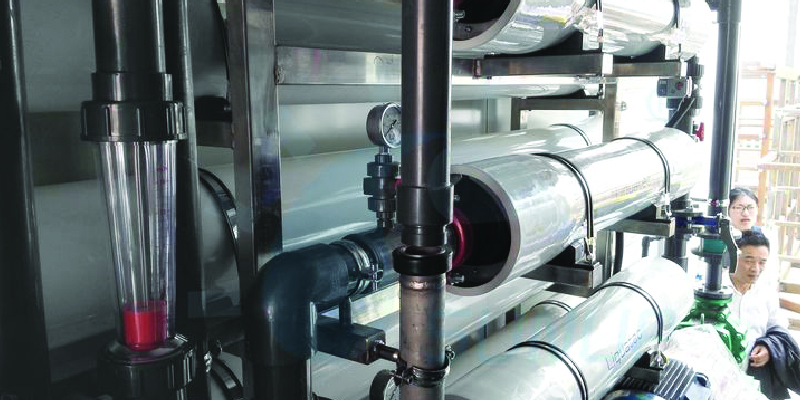
You know how water is something we expect — flip a tap, and there it is. Most of us don’t think twice. But as the world changes—climate stress, growing populations, shrinking freshwater sources —that simple expectation is starting to break. For many people, industries, and communities around the globe, access to secure, clean water is becoming increasingly difficult.
That’s why containerized desalination plants — compact, modular systems that turn seawater (or brackish water) into fresh, usable water are beginning to look like a quiet revolution in water supply. By 2026, these could become a go‑to solution for anyone who needs water quickly, reliably, and responsibly.
Here’s why they make sense.
1. Get Water In Minimal Time
Think about how slow and messy big infrastructure projects can be: land acquisition, construction delays, building permits, and long timelines. Containerized desalination plants are at the opposite end of that spectrum.
They come pre‑built, in modular container units. Install them, connect them to water and energy lines — and voilà, water starts flowing. No massive construction. No sprawling land. No waiting years for commissioning.
- Fits in small or tight sites — like coastal towns, resorts, or industrial premises.
- Portable — if your needs change, you can relocate the units.
- Great for urgent needs — disaster‑hit areas, remote regions, temporary operations.
If water demand is unpredictable or you simply want a quick, reliable water source, this plug‑and‑play approach is a big advantage.
2. Affordable and Grow‑As‑You‑Go
Full‑scale desalination plants are expensive. Hard to justify for small towns, businesses or projects that don’t need millions of liters per day. But containerized systems change that equation.
- You don’t have to commit huge capital upfront. Start small, then gradually expand as you grow.
- Modern designs include energy-efficient pumps. Again, with automation, you can keep operational costs reasonable.
- Capacity is customizable, whether you need tens of thousands of liters per day or a few hundred thousand.
This flexibility makes desalination realistic even for every industry. By 2026, as water demand becomes only more unpredictable, this kind of scalability isn’t just nice to have — it might become essential.
3. Cleaner, Greener Step
Environmental Impact is one of the big concerns around desalination. After all, forcing seawater through membranes, energy use, and potential waste are serious issues.
But containerized plants are often built with newer tech and efficiency in mind. Across the water industry, there’s a growing focus on sustainable desalination: energy recovery devices, efficient reverse‑osmosis membranes, optimized pretreatment — all aimed at reducing energy use and minimizing environmental footprint.
What’s more: many are now being designed to work with renewable energy — solar or wind — especially for off-grid or remote setups.
So when you go this route, you’re not just chasing convenience — you’re making a water solution that respects sustainability. Clean water, with a cleaner conscience.
4. Access Water Where It’s Needed Most
Water isn’t about convenience; it’s about survival or essential operations. Containerized desalination plants shine in these settings. Because they’re modular and self‑contained, they don’t rely on long pipelines or centralized infrastructure. They can get water where traditional systems simply can’t.
- Coastal towns and island communities with failing freshwater sources.
- Remote industrial or mining sites far from municipal supply lines.
- Resorts or seasonal operations that need water only for some of the year.
- Emergency or disaster‑relief zones where water infrastructure has failed.
5. Smart Water — Built for 2025 and Beyond
This isn’t 1980 anymore. Desalination is evolving rapidly today, driven by technology, data, and smart‑system integration.
- Real‑time monitoring of water quality, energy usage, output — so you always know what’s happening.
- Predictive maintenance is smarter. The system alerts you before an issue occurs. This cuts downtime and avoids costly surprises.
- Integration with renewable energy and smart‑grid infrastructure comes with flexibility and efficiency.
These aren’t just water tanks, they’re water systems with brains. For 2026, with water scarcity, climate uncertainties, and shifting demands, a “smart” water supply isn’t a bonus; it’s a necessity.
The bottom line
The future of water isn’t about building bigger and bigger plants. It’s about being smarter, more flexible — about matching water supply to real-world needs. Well-built containerized desalination plants bring speed, flexibility, sustainability, and technology to the table.
If you care about reliable water — for a community, a business, a project, or a future generation — this isn’t just a neat idea. It’s a serious water solution for 2026 and beyond.
If you’re ready to explore what that could look like for you, contact Keiken Engineering. We can help you design a solution tailored to your needs: efficient, sustainable, and built for real life.
FAQs
What is a containerized desalination plant?
It’s a compact, ready-to-use system that quickly and reliably turns seawater or brackish water into clean, fresh water.
How much does a containerized desalination plant cost?
Costs vary by size, but these plants are usually more affordable than traditional facilities and can be expanded as your needs grow.
Where can a containerized desalination plant be used?
They can be used almost anywhere—coastal towns, remote sites, resorts, or emergencies where clean water is needed fast.