
20/February
Solve Big Water Issues with Water Treatment Pilot Plants
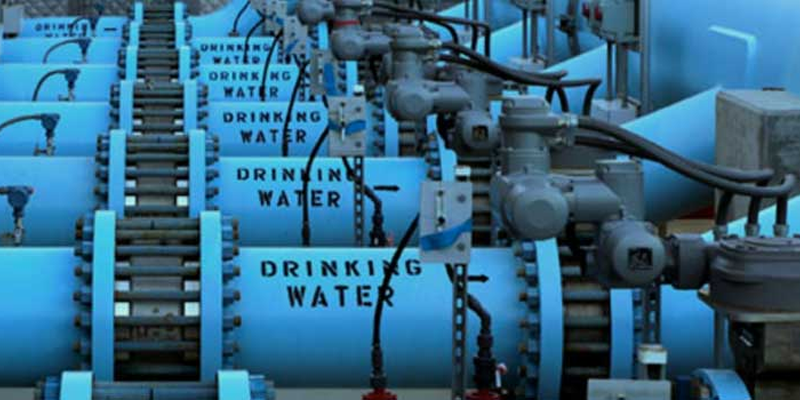
Water treatment in an industry is akin to preparing a meal for 1,000 people. Once the guests are there, you do not want to experiment with the recipe. A slip of the knife, and the soup is now full of remorse and cost overruns.
This is precisely why industries use Water Treatment Pilot Plants and then construct a complete treatment facility. We at Keiken Engineering offer exclusive water treatment pilot plants. These are test-ready, small-scale systems that enable engineers to test, validate, and optimize designs without the huge infrastructure investments required.
Water Treatment Pilot Plants: What is the definition and the key reasons to use them by industries?
A small-sized water treatment system is known as a water treatment pilot plant. Industries use it to test treatment technologies, study water chemistry behaviour, and evaluate system performance before the plant's actual design.
Industries deal with very complex water sources, including industrial wastewater, process water, brackish water, and even water that appears to have emerged directly from a science experiment gone awry. A pilot plant, an innovation of Keiken Engineering, helps determine which treatment method is most effective.
The pilot plants are important to companies as they facilitate:
- Treatment processes on real water samples under actual conditions
- Determine the operational problems in an early stage, prior to making large investments
- Design to optimise the efficiency of the system and reduce the use of power
- Check the compliance of discharge and reuse standards
What are the ways pilot water treatment plants validate wastewater treatment?
Industrial wastewater is hardly predictable. It varies in many ways, depending on production cycles, raw materials, and even the weather. Pilot testing is highly valuable because of such uncertainty.
Pilot plants will mimic the actual treatment environment and enable testing of water behavior throughout the process. They consider factors such as contaminant removal efficiency, operational tolerance, and the need for chemical dosing.
Other parameters, such as turbidity, total dissolved solids, organic contaminants, and microbial levels, are also measured by the engineers. This will indicate the viability of a treatment process for implementation in accordance with environmental standards and performance requirements.
More to the point, pilot testing reveals issues early on. It may be that the membrane fouling speed is higher than anticipated, or that the filtration stage requires more pre-treatment. These problems are much less expensive to identify during testing than after building a full-sized plant.
That is, pilot plants make theory a reality. Other than that, if you are wondering about using electric charge to shock contaminants in water rather than shock you, you can also check out (How Polyelectrolytes Improve Wastewater Treatment Efficiency).
Is it possible to lower the risk and cost of full-scale water treatment projects?
Definitely, and this is where pilot plants are made monetary superheroes in association with full-scale water treatment projects.
A complete industrial water treatment plant is an expensive asset to establish. Unless there’s proper testing, companies may install systems that do not work effectively or will have to undergo expensive redesign. We reduce the potential risk through pilot plants by providing real operational data. One can optimize the system parameters, establish the chemical's precise requirements, and calculate realistic operating costs. Organisations do not base their assumptions on proven performance metrics. This minimises engineering uncertainties and undesirable changes in the future.
In other words, a pilot plant will be much less costly than a poorly constructed full-scale plant. In massive industrial endeavours, one error can cost you millions, which you will surely want to avoid. Thus, making the right choice is strategically important to you.
Which technologies can you use to test water treatment pilot plants?
You can test several advanced treatment methods with pilot plants, such as:
- Reverse Osmosis of dissolved salts and contaminant removal
- Separation of suspended solids and microorganisms by ultrafiltration
- Biological treatment membrane filtration, in which the membrane is used as a combination system
These technologies may be tested separately or as part of hybrid treatment systems. Engineers examine performance, energy use, and maintenance needs to determine the most efficient combination.
What are the methods to choose an appropriate pilot plant to build a full treatment facility?
The selection of an appropriate pilot plant should be well thought out. The whole idea of a pilot test is to produce credible results that will, after all, lead to the ultimate design.
Thus, choosing the right pilot plant for full treatment capacity involves the following methods:
Water properties such as contaminant types, salinity, and fluctuations.
- Goals of treatment such as reuse, discharge compliance or purification standards.
- Scalability of the systems so that pilot results can be relevant to full-scale systems.
- Conditions of operation, such as flow rates, pressure levels, and chemical dosages.
We at Keiken Engineering focus on creating a pilot test that represents real operating conditions. When properly carried out, the information obtained is the plan of the subsequent plant.
Final Thoughts
The industrial water treatment projects are too large and too costly to be left to guesswork. Water treatment pilot plants serve as testing laboratories where technologies are validated, design refinements are made, and uncertainty is reduced at high cost.
Conducted at a smaller scale, controlled experiments help companies be confident in their treatment approaches without fully investing in infrastructure. The outcome is improved system performance, reduced operational risks, and smarter investment choices. Thus, without further delay, choose us. This is because pilot plants allow industries to make mistakes without incurring the very high costs of construction projects.
FAQs
1. Are water treatment pilot plants only for wastewater treatment?
No. They are also used in industries to treat potable water, desalinations, and water reuse.
2. Is it possible to test more than one treatment technology on the pilot level?
Yes. Engineers often test combined systems to determine the most efficient treatment configuration.
3. What is the purpose of pilot testing in an industrial project?
It guarantees that treatment processes take place as anticipated before firms invest in large-scale infrastructure.