
13/February
Salty Water Into Opportunism: Why Desalination Plants Matter
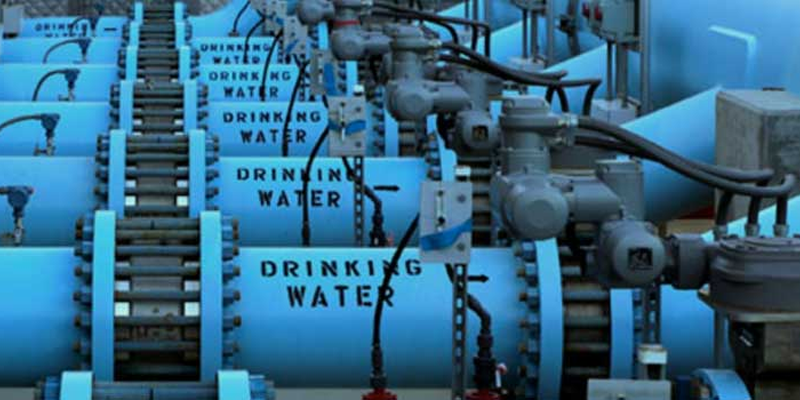
Let’s begin with a hypothetical situation. You are the owner of a factory located close to the ocean, looking at millions of litres of water daily... all of which are unusable. It is just like sitting next to a huge buffet table and noticing that everything on the plate is composed of plastic. Plenty to see, nothing to eat.
Water is ubiquitous, but salt renders it unsuitable for industrial use. It is where efficient desalination plants come into play. These systems remove salt and minerals from seawater, converting it into usable water for industrial, urban, and construction purposes.
Water is becoming a strategic need rather than an option amid water shortages, as the world faces the rising challenge of the water crisis. For industries heavily dependent on water, desalination is a good long-term supply option that limits reliance on freshwater sources.
Which effective technology is behind the modern desalination plants?
Modern desalination plants use advanced technologies to produce high-quality water with lower power consumption. We at Keiken Engineering have developed systems that are more efficient, smarter, and faster than in years past.
The reverse osmosis (RO) is the most prevalent technology today. Put simply, reverse osmosis forces seawater through a semi-permeable membrane. The membrane is a microscopic security guard; it permits water molecules to enter, whereas salt and other contaminants are not allowed in.
Earlier desalination methods, such as thermal distillation, involved heating large volumes of water, which required significant energy. The game is changing with reverse osmosis, which uses pressure rather than heat. This has made present-day desalination plants more efficient and less expensive to operate.
Today, thanks to technological innovations, desalination plants can produce millions of litres of clean water each day, with lower energy consumption than before, thanks to advances in membrane materials, monitoring systems, and automation.
What are the ways used to reduce the cost of energy for industries?
One of the most important issues in desalination has always been energy consumption. Pumping, pressure, and handling large volumes of water may require high power. Nevertheless, modern plants use a number of methods to keep energy costs low.
Among the best energy-saving measures are:
- Energy recovery devices that reduce wastewater pressure and reuse it within the system
- Pumps that are high efficiency with the aim of minimizing electricity use
- The development of superior membranes that run at a lower pressure.
- Intelligent monitoring systems that optimise real-time plant performance.
These advances have significantly reduced the energy costs of desalination stations. Desalination through an efficient desalination plant is now cheaper in most industrial installations than delivering fresh water over long distances.
What are the reasons to prefer reverse osmosis?
In a popularity contest among desalination technologies, reverse osmosis is likely to be the landslide winner. There are several practical reasons it favours engineers and plant operators.
Efficiency Criteria
To begin with, reverse osmosis systems are very efficient. They will be able to separate up to 99 percent of the salts and impurities from seawater. This implies that the industries that receive high-quality, stable water use it in various ways.
Scaling of the RO Systemology
Second, reverse osmosis systems can be scaled. A plant will have a small capacity that you can increase as demand increases. This can be bent, especially in industrial facilities where water demand increases over time.
Simple Operation
Operation simplicity is another factor that industries favor in reverse osmosis. RO plants are simpler to operate and maintain than older thermal desalination plants. Modern automation and monitoring devices enable operators to manage large systems without manual adjustment.
Energy Efficient
Lastly, reverse osmosis is not very energy-intensive. It does not involve heating water, and thus, energy consumption is very low compared to thermal processes.
Thus, we at Keiken Engineering introduced exclusive reverse osmosis solutions that offer a range of advantages. To gain a deeper understanding of its effectiveness, you can also check (Reverse Osmosis – One of the Best Methods for Efficient Desalination of Seawater).
Which industries gain the most from an efficient desalination plant solution?
Many industries use significant amounts of water daily, and in their case, desalination may be a breakthrough.
Among the industries that are the most beneficiaries are:
- The generation plants require purified water for cooling and steam generation
- Oil and gas facilities that are either situated in coastal areas or located in offshore settings
- Water-intensive manufacturing industries like the processing, cleaning, and cooling
- Chemical and pharmaceutical factories require high-quality water
- City infrastructure projects to provide water to the expanding cities
- In such industries, an efficient desalination plant provides a stable water supply in areas with limited freshwater sources.
How do companies choose an appropriate, efficient desalination plant for treating industrial water?
The choice of an efficient desalination plant is much like choosing an engine for a machine. The system should be commensurate with the size of the operation, the quality of the source water, and the end requirements for water.
Companies tend to start by examining the salinity of the water they have and the amount of water they need to operate in one day. The engineers then consider the plants' capacity, power-use efficiency, maintenance needs, and the cost of long-term operations.
Reliability is also another factor. This is because industrial plants cannot afford to experience regular water-related downtime. The current desalination plants, which we have designed with automated monitoring and filtration stages, ensure reliable performance. Thus, collaborating with us makes it easy to help businesses design tailor-made desalination systems that meet operational and environmental requirements.
Wrap Up
The efficient desalination plant is changing how industries treat water. Companies can now use seawater as a reliable source of freshwater for industrial purposes, rather than relying solely on freshwater.
Desalination has been smarter and more economical than ever, thanks to efficient technologies such as reverse osmosis, enhanced energy recovery systems, and advanced monitoring tools. So what are you thinking so deeply about? Make a strategic, effective choice and connect with us. With the rising global demand for water, core desalination plants are offering industries sustainable methods to obtain water as they expand their businesses.
FAQs
1. Are desalination plants energy-consuming?
The desalination process consumes energy, though modern processes employ energy-recovery systems and membranes that minimize power consumption.
2. Is desalinated water safe in industry?
Yes. When treated well, desalinated water meets some quality standards required in most industrial operations.
3. Is it possible to desalinate plants in small industrial arrangements?
Yes. The current desalination systems are scalable, and you can configure them as small plants and/or large industrial plants.